About Photonic Crystals

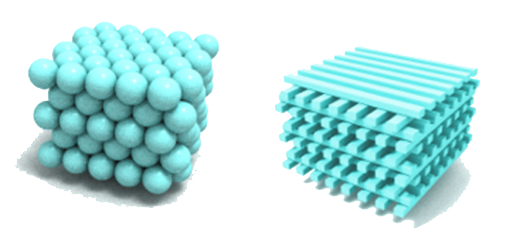
Photonic crystals are artificial structures made in regular patterns, a technology that enables control of light that cannot be achieved with naturally occurring materials. However, because of the need to precisely fabricate very fine structures, few companies have even put this technology to practical use.
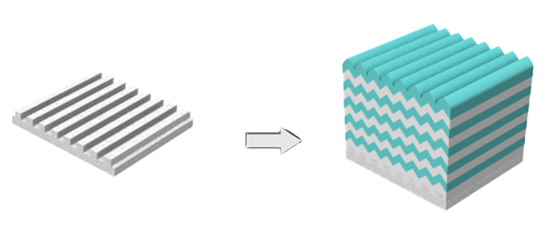
We have the technology to create photonic crystals simply by stacking multiple layers of films on a wafer with uneven surfaces.
The size of the unevenness can be freely varied from tens of nm to several micrometers.
We can create precise three-dimensional structures with a simple process of a single patterning and deposition of the films.
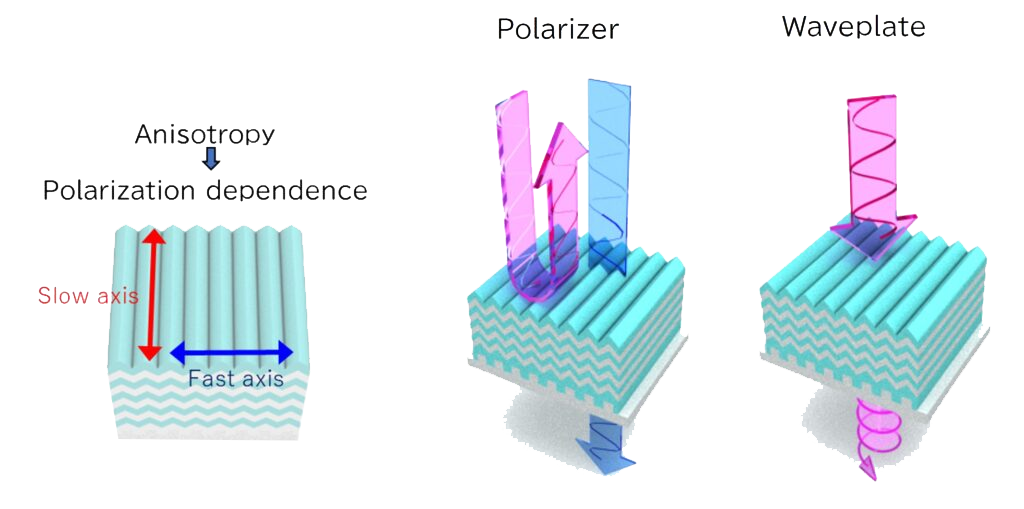
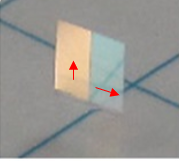
For example, in the structure shown on the right figure, anisotropy in the structure causes a difference in optical properties between vertical and horizontal polarization. The direction of anisotropy is determined by the pattern of the wafer.
When the thickness of each layer is controlled, the interference of light in the multilayer film allows it to function as a polarizer, in which one polarization is reflected, or as a waveplate, in which the polarization state is changed.
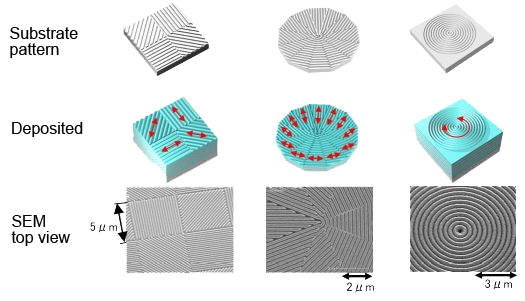
By changing the pattern of the wafer, polarizers and waveplates with various axial distributions can be freely made. In other words, free polarization distribution can be realized.
This technology is used in polarization imaging sensors, multichannel polarization conversion elements for optical communications, and as special filters for semiconductor wafer inspection.
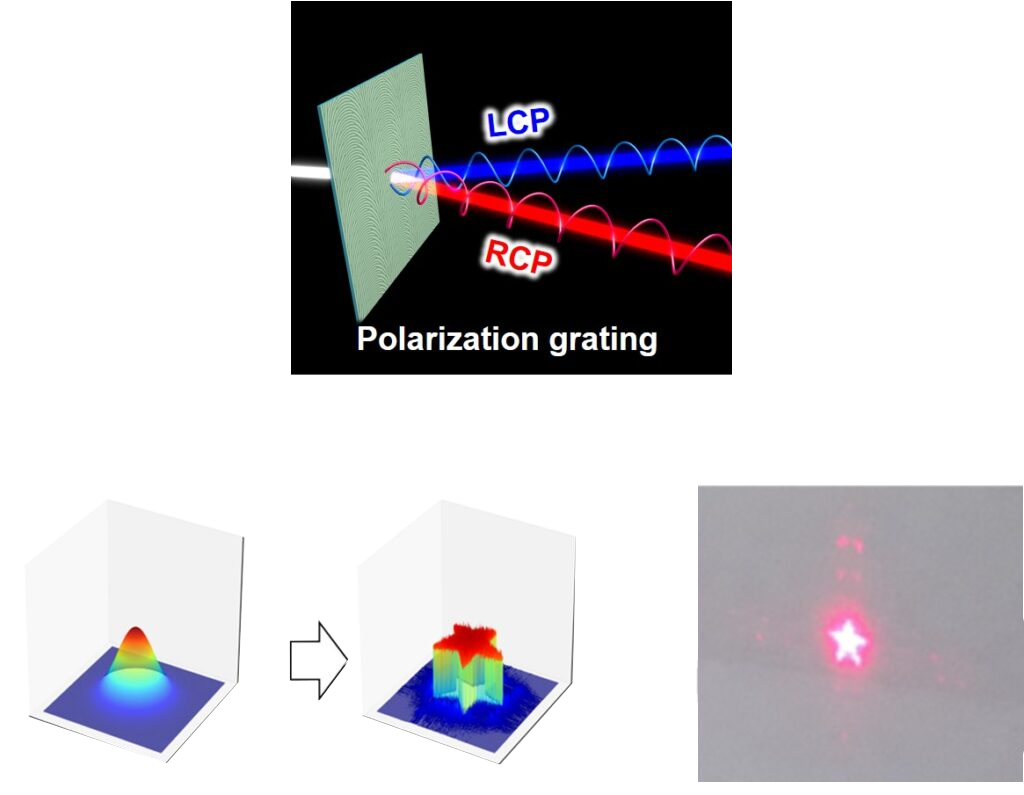
More recently, we have introduced the concept of geometric phase and are working to realize new functions through phase control. We have realized diffraction gratings that can separate left and right circular polarization and control beam shape.
The control of not only polarization but also phase is developing new applications.
related product

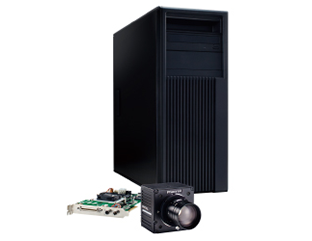
CRYSTA Nova S16

This product combines Photron's "FASTCAM Nova" series, which boasts a long history of success in the high-speed camera industry, with Photonic Lattice's proprietary polarization sensor. It is ideal for cutting-edge research and development and measurement fields that require high-speed, high-precision data collection.

MORE

Custom Polarizer & Phase Plates

Our products can be customized not only for the optical properties, but also for the shape and the spatial distribution of those properties. In particular, they can be made non-uniformly, having a segmented structure or a curved axis along the surface. Customization of the patterned polarizer/waveplate is welcome.

MORE

Axial polarization conversion element SWP Series

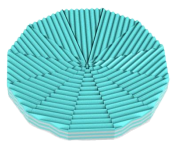
A waveplate with 12 axial-azimuth regions that can realize axis-oriented polarization simply by inserting it into the optical path. It converts linear polarization into radial (radial) or concentric (azimuthal) polarization. The high transmittance achieves a conversion efficiency of almost 100%. It is effective in optical tweezers, laser processing, etc.

MORE

Ultra fast Fizeau interferometer DELTAPH

The system can measure phase shift image from one snapshot fringe image without mechanical scanning. Its high-speed and real-time capabilities allow the evaluation of fast-moving dynamic phenomena.

MORE

Related solutions

Birefringence & Stress Strain Measurement

We have improved conventional birefringence measurement from point measurement to 2-D surface measurement. High-speed, high-precision birefringence measurement contributes to quality evaluation and functional improvement of optical materials.

MORE

Ultra-precision micro laser processing

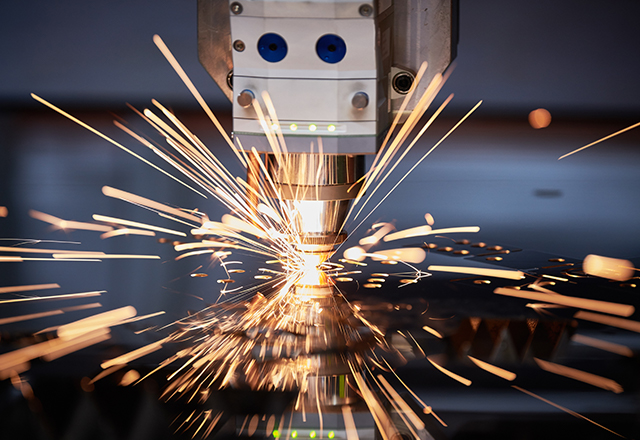
Microfabrication technology is becoming increasingly important for next-generation EVs and semiconductor devices. We support the development of this field with our unique beam shaping, polarization control, and high speed temperature imaging technologies.

MORE

Full-length, full-width film quality control

With the industry's first full-surface measurement technology for birefringence distribution in optical films, we contribute to the improvement of film quality that leads to the assurance of image quality across the entire display screen.

MORE

Next-generation Optical Communications

Polarization control is becoming increasingly important in next-generation optical communications. In addition to application examples of our proprietary photonic crystals, we also introduce upcoming functions in the future.

MORE

Related case studies

Related columns

Catalog Download
Quote & Demo Request
Contact Us
Software Download